Car write-off categories explained
What Cat A, B, S and N mean, whether you can drive or insure a written-off car, and what to check before buying one.
Updated
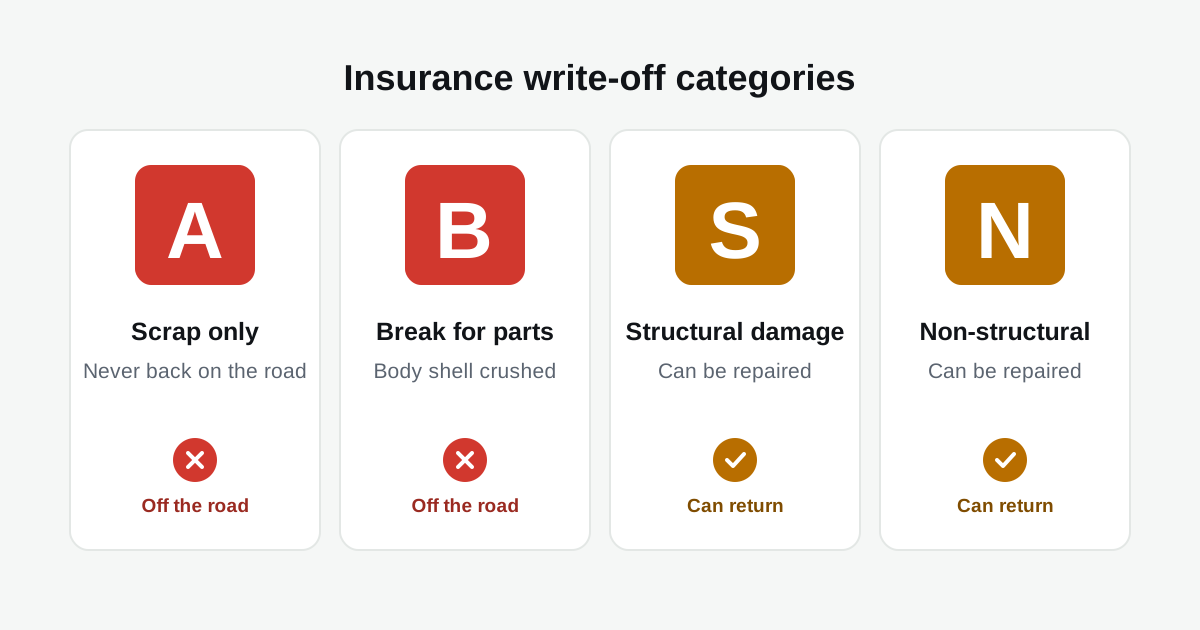
When an insurer decides a damaged or stolen car isn't worth repairing, it pays the owner out and "writes off" the car. Every write-off is given a category, and that category tells you how bad the damage was and whether the car is allowed back on the road. If you're buying a used car, it's one of the most important things to know about it.
The four write-off categories
| Category | What it means | Back on the road? |
|---|---|---|
| Cat A | Scrap only. The whole car must be crushed. | Never |
| Cat B | Break for parts. Some parts can be sold, but the body shell must be crushed. | Never |
| Cat S | Structural damage, such as a bent chassis or damaged crumple zone, which can be repaired. | Yes, once repaired and re-registered |
| Cat N | Non-structural damage, such as cosmetic, electrical or trim damage. | Yes, once repaired |
If anyone tries to sell you a Cat A or Cat B car to drive, walk away and report it. Those cars should never be back on the road.
What about Cat C and Cat D?
These are the old categories, replaced in October 2017. Roughly, Cat C became Cat S and Cat D became Cat N, although the old categories were based on the cost of repair rather than the type of damage. You'll still see Cat C and Cat D on older cars. A Cat D car could have had very minor damage on an expensive car, so the category alone doesn't tell you everything.
Can you drive and insure a Cat S or Cat N car?
Yes, once it's been properly repaired. A Cat S car has to be re-registered with the DVLA before it goes back on the road, and the V5C logbook will show it's been written off. A Cat N car doesn't need re-registering.
Insurance is usually available, but some insurers charge more for written-off cars and a few won't cover them at all. Get a quote on the exact car before you commit.
Is a written-off car worth buying?
It can be. A Cat N car with cosmetic damage that's been repaired well can be genuinely good value. Just go in with your eyes open:
- It should be cheaper. Written-off cars usually sell for noticeably less than clean ones, and they'll be worth less when you come to sell, too.
- The repair is what matters. Ask for photos of the damage and invoices for the repair. On a Cat S car, get an independent inspection before you buy.
- Check the salvage history. Many written-off cars are sold through salvage auctions, sometimes with photos of the damage. A salvage history check shows if this one was. Our sample report shows what a salvage record looks like.
- Sellers must be honest. A dealer mustn't hide a write-off. If you find out afterwards, you may be able to reject the car.
How to find out if a car has been written off
The write-off record isn't in the free DVLA or MOT data. It's held on the insurance industry's register, and you'll find it with our write-off check. See what each check includes on our pricing page, or start with a free reg check. The report shows the category, the date of loss and, where it was recorded, which part of the car was damaged.
There are also clues on the car itself: a recent V5C issue date, paint that doesn't quite match between panels, uneven gaps around the doors and bonnet, and a price that seems too good to be true. Our used car checklist covers what to look for.