How to read a UK number plate
What each part of a UK number plate means, how the age identifier works, and the rules for private plates.
Updated
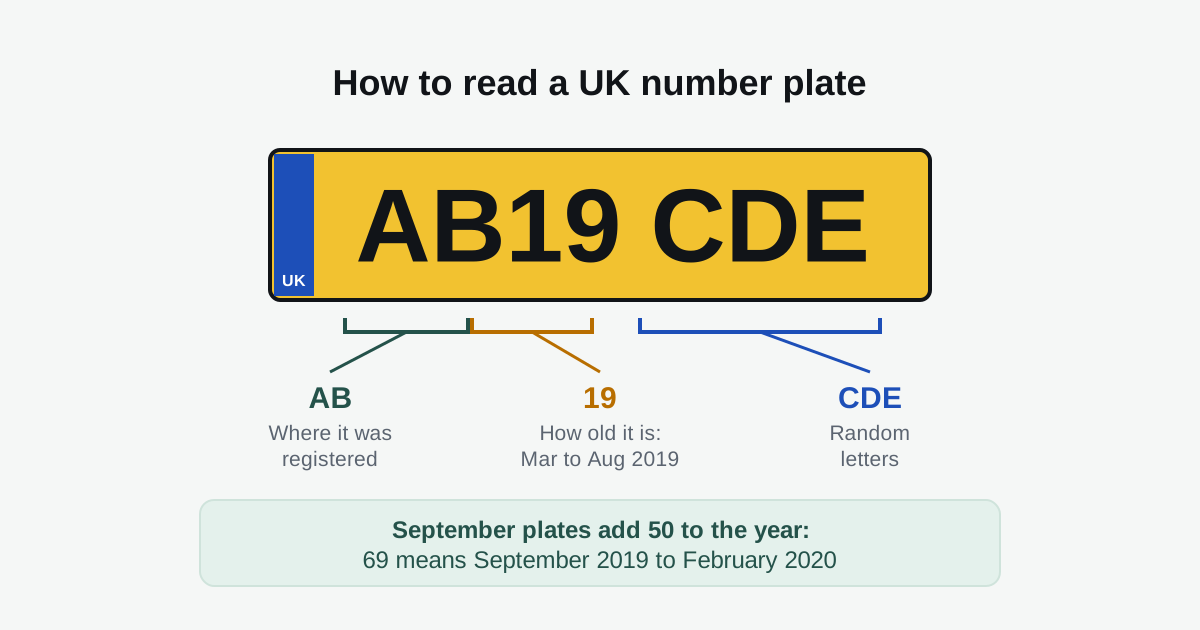
A UK number plate isn't random. Since September 2001, every standard plate tells you roughly where a car was first registered and exactly which six-month period it was registered in. Once you know the pattern, you can tell a car's age at a glance.
The three parts of a current plate
Take the example plate AB19 CDE:
- AB: the memory tag. The first letter is the region where the car was first registered, and the second letter narrows it down to a DVLA office within that region.
- 19: the age identifier. This shows when the car was registered.
- CDE: three random letters. These just make each plate unique.
How the age identifier works
New plates are released twice a year, on 1 March and 1 September:
- In March, the number is the last two digits of the year. So 19 means March to August 2019.
- In September, it's the year plus 50. So 69 means September 2019 to February 2020.
A few more examples: 23 is March to August 2023, 73 is September 2023 to February 2024, and 26 is from March 2026. The system started with 51 in September 2001.
Private plates
Private or "cherished" plates can be put on any car, with one rule: a plate can't make a car look newer than it is. So you can put an older-looking plate on a newer car, but not a 2024 plate on a 2015 car.
Private plates are perfectly legal and very popular. They do mean a car's registration can change during its life, which is why a number plate history check is useful: it links every registration the car has carried, so its history isn't lost when the plate changes.
Older plate formats
Before 2001, the age was shown by a single letter. From 1983 to 2001 that letter came first (the "prefix" format, such as A123 BCD), and before that it came last (the "suffix" format). Very old plates with no year letter at all are known as dateless plates, and they're mostly used as private plates today.
The rules for plates themselves
- Plates must be white at the front and yellow at the back, with black characters.
- They must use the standard font and spacing. Changing the spacing to spell a word, or using stylised characters, is illegal and can fail an MOT.
- Plates made since September 2021 must meet the latest British Standard, and the only national identifier allowed on the left is UK.
- Plates must be made by a registered supplier, who will ask for proof that you're entitled to the registration.
Using the plate when you buy a car
The age identifier is a quick way to check an advert is honest about the car's age. Remember, though, that a private plate can hide the age, so the plate on its own isn't proof. Put the registration into a free car check to see the official date of first registration, and match the VIN to the V5C. Our guide to VIN numbers shows you how.