What is a car history check?
What a car history check covers, what a free check misses, and when paying for a full check is worth it.
Updated
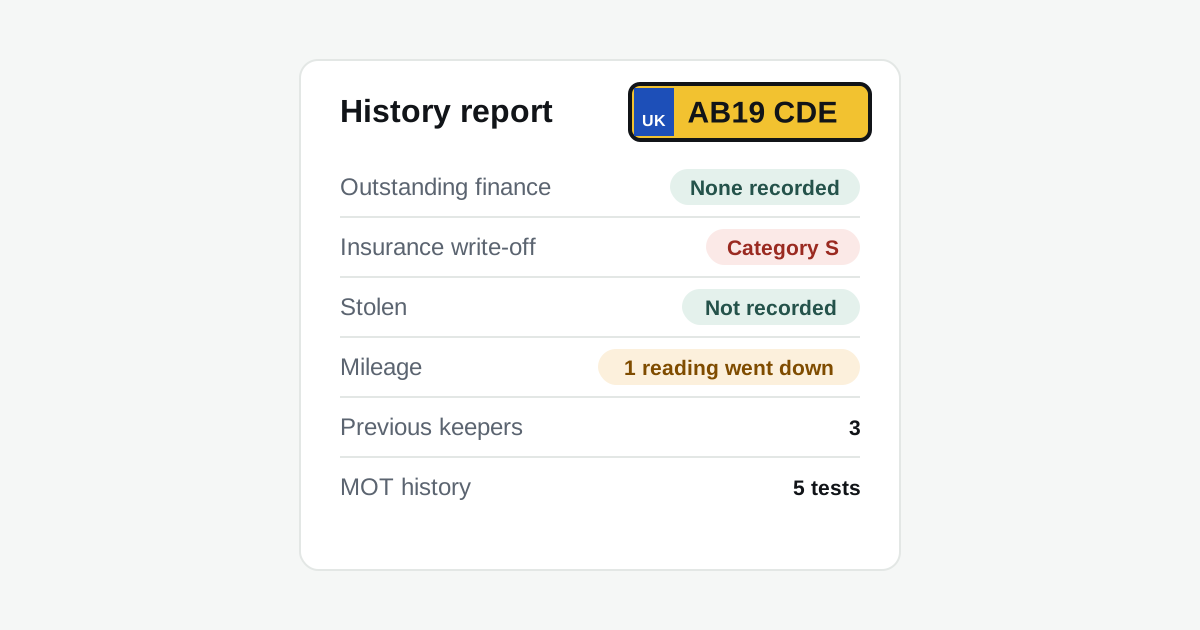
A car history check pulls together the official and industry records held about a car, so you can see what's happened to it before you buy it. You type in the registration, and a few seconds later you know whether it's been written off, whether there's money owed on it, and whether the mileage adds up.
It's one of the cheapest bits of protection you can buy, and it's the only way to see some of the things a seller might not mention, whether they know about them or not.
What a history check looks at
Different checks cover different things, but a full check normally includes:
- Outstanding finance. Whether there's a hire purchase, PCP or other agreement still on the car. If there is, the finance company usually owns it until it's paid off.
- Insurance write-offs. Whether an insurer has declared it a write-off, and which category. Our write-off categories guide explains what A, B, S and N mean.
- Stolen and high risk markers. Whether it's recorded as stolen on the police database.
- Mileage. Every recorded reading, checked for anything that doesn't add up.
- Keepers and plate changes. How many people have owned it, and whether it's had private plates.
- Salvage, scrapped and imported records. Whether the car has been through a salvage auction, recorded as scrapped, or brought in from abroad.
- Valuation. What the car is actually worth, so you know if the price is fair.
Free check or paid check?
Some of this information is public, and some isn't. The DVLA and DVSA publish vehicle details, tax and MOT status, and the full MOT history, including the mileage at each test. That's what our free car check shows, and it's genuinely useful: it confirms you're looking at the right car and flags mileage that has gone down.
What the free data can't tell you is anything held by finance companies, insurers or the police. That's why finance, write-offs and stolen checks cost money: the data comes from paid sources. You can compare exactly what's included on our pricing page.
When should you do one?
Ideally twice. Once when you first find a car you like, so you don't waste time viewing a car with a problem. And once more just before you pay, because finance can be taken out against a car at any time, including the week before the seller advertised it.
Always check the car you're actually buying. Read the registration off the car itself, not just the advert, and make sure the VIN on the car matches the V5C logbook. A history check on a cloned car will tell you all about a different, perfectly legal car.
What a history check can't tell you
A history check is about records, not condition. It won't tell you the clutch is on its way out or that the timing belt is overdue. For that you need a proper look round the car, a good test drive, and ideally an independent inspection on anything expensive. Our used car checklist covers what to look for on the day.
It also can't tell you about damage that was never reported to an insurer. A car that was repaired privately after a bump won't show up as a write-off, which is another reason to look carefully at the bodywork.