MOT advisories explained
Dangerous, major, minor and advisory MOT defects explained, and which repeated advisories should worry a used car buyer.
Updated
The MOT history is one of the most useful things you can read before buying a used car, and it's free. But the language can be confusing. What's the difference between a minor defect and an advisory? Should a long list of advisories put you off? Here's how to read it like a mechanic would.
The four types of MOT result
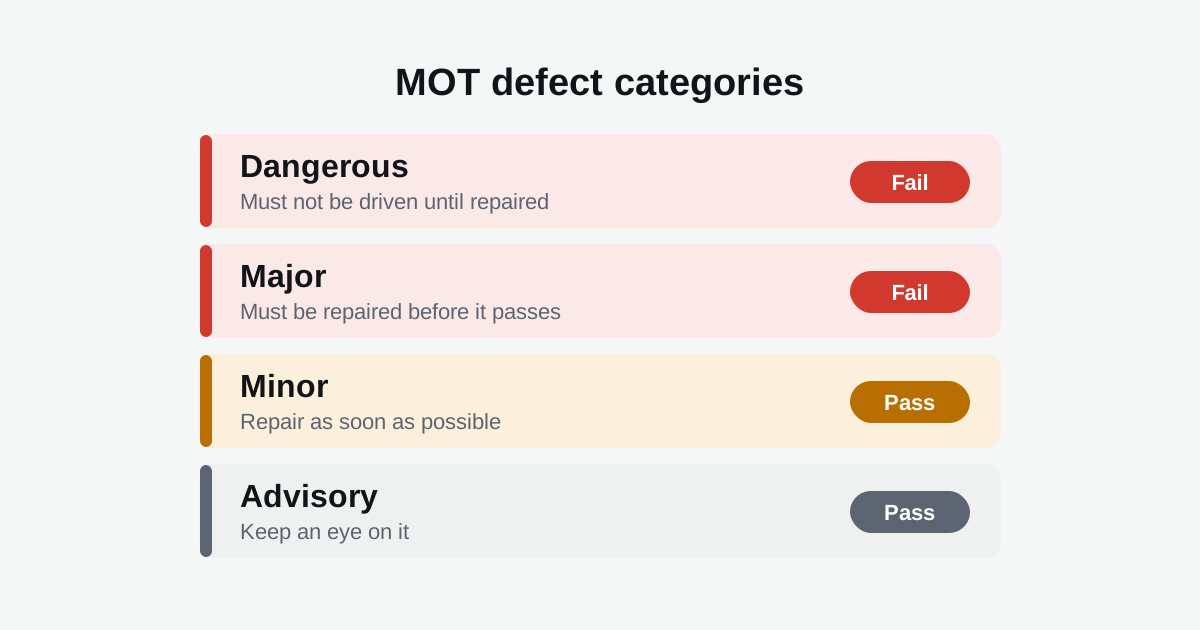
Since May 2018, anything an MOT tester finds is put into one of four groups:
- Dangerous. A direct risk to road safety or the environment. The car fails, and it shouldn't be driven until it's fixed.
- Major. Could affect safety or the environment. The car fails and must be repaired before it can pass.
- Minor. No significant effect on safety, but it should be repaired as soon as possible. The car still passes.
- Advisory. Something that isn't a problem yet but could become one. The car passes, and the tester is giving the owner a heads-up.
You'll see all of these in a car's MOT history on our MOT check, test by test.
Why advisories matter when you're buying
Advisories are a free preview of what the car will need next. "Front brake discs worn" means you'll probably be paying for discs and pads soon. "Tyre worn close to legal limit" means new tyres. Neither is a reason to walk away, but both are a reason to knock something off the price.
The ones to watch are the advisories that come back year after year without ever being fixed. A single "slight corrosion" note on a ten-year-old car is normal. The same corrosion note getting worse over four tests, then turning into a fail, tells you the car hasn't been looked after and the next repair bill could be big.
Advisories that deserve a closer look
- Corrosion on structural parts, such as sills, subframes or suspension mounts. Surface rust on a bracket is one thing; corrosion on the structure is expensive and can be dangerous.
- Oil leaks, especially if they're described as getting worse. They can be cheap to fix or a sign of something bigger.
- Suspension and steering wear, like worn ball joints or bushes. Not dangerous yet, but a fail waiting to happen.
- Brake pipes corroded. A cheap repair, but not one to put off.
- Repeated tyre advisories on the same corner, which can point to alignment or suspension problems rather than just old tyres.
What a clean history tells you
A car that passes most years with only one or two advisories, which then disappear at the next test, has usually had an owner who fixes things as they come up. That's exactly what you want. Pair it with a good service history and you've got a car that's been cared for.
Don't forget the mileage
Every MOT records the mileage, so the history doubles as a mileage record going back to 2005. The readings should only ever go up. If one test shows fewer miles than the test before, that's a red flag for clocking, and our free check highlights it automatically. Read signs a car has been clocked to find out what to do next.
When does a car need its first MOT?
In England, Scotland and Wales, a car needs its first MOT three years after it was first registered, then every year after that. So a car under three years old won't have any MOT history yet, which is normal.